Should You Worry About AI Data Centers When Buying a Home in Phoenix? Home Prices, Water, Power, and Noise Explained
When touring homes in Greater Phoenix, if a large AI data center is being planned nearby, many buyers’ first questions are usually: Will it be noisy? Will water be scarcer? Will it affect my electricity bill? Will home prices drop because of it?
A 2026 study from Realtor.com Economic Research offers a noteworthy answer: there is currently no meaningful evidence that nearby home prices see a significant decline after a large data center moves in.
The study analyzed 43 ZIP codes that gained a large data center between 2019 and 2025, comparing them with similar areas without a large data center. The study treated homes within 5 miles of a large data center as “nearby.” In the first two years after a data center went live, home price trends were broadly consistent with the comparison areas.
That doesn’t mean data centers have no impact on residential life at all. Realtor.com also cautioned that the data only covers a two-year observation period—issues like electricity costs, cooling-system noise, and truck traffic may take longer to become visible.
View the original Realtor.com study
When Buying in the Phoenix Metro, These 4 Things Matter More to Me
- Water resources and cooling methods. Arizona is already a water-sensitive region, and the type of cooling a large facility uses directly affects its water demand. Traditional cooling towers can consume large amounts of water, but newer-generation data centers may use closed-loop, air cooling, or other water-reducing technologies.
In recent years, the City of Phoenix has made large-water-user and data-center water assessments part of its planning review; SRP has also noted that some cities require large industrial users to limit water use or even secure their own water sources. So when buying, don’t just ask “Is there a data center nearby?”—ask what cooling method and water-source plan it actually uses. - Power demand and grid infrastructure. Large AI data centers are enormous electricity users. SRP has said the load of some large data centers can reach about 200 MW, and data centers are currently among SRP’s fastest-growing customer types.
That doesn’t mean residential electricity bills will necessarily rise. SRP’s current rate principles require large commercial and industrial customers to pay for the infrastructure costs added or upgraded because of their demand, reducing the risk of costs being shifted to residential customers. For buyers, a more practical question than “will my electric bill go up” is whether new substations, transmission lines, or large energy facilities will be needed nearby. - Noise, backup generators, and traffic. Data centers typically operate 24 hours a day, and cooling equipment, mechanical systems, and backup generators can all generate noise; building, maintaining, or expanding the facility can also bring more large vehicles in and out.
When the City of Phoenix updated its data-center land-use regulations, it also listed noise, grid reliability, fire risk, and emergency response as items that must be evaluated. For day-to-day living, these factors are sometimes more direct than home-price statistics. - Most important: Will more get built in the future? If an area already has the land-use zoning, power supply, fiber optics, and major infrastructure suited for data centers, the possibility of a second or third data center appearing in the future is usually worth tracking.
That’s why I tell buyers not to look only at the vacant land outside the window today. What really matters is checking surrounding land uses, approved development projects, and road and utility plans. Today’s vacant land could be homes, a shopping center, or an industrial facility in five years—or an entire data center campus.
Seeing a Data Center Doesn’t Mean the Area Can’t Be Bought
If you’re looking in Phoenix, Mesa, Chandler, Gilbert, Queen Creek, North Phoenix, or the West Valley, I wouldn’t tell you an area is off-limits just because there’s a large data center within 3–5 miles—but I also wouldn’t tell you there’s nothing to think about.
I’d first walk through a few questions together: How far is the data center from the home? How large is it? Is it already operating or still in planning? Could it expand in the future? Is the surrounding land zoned residential, commercial, or industrial? Will more water and power facilities be added?
In Arizona home buying, location matters—but future land use matters just as much. A home’s floor plan can be changed, but many of the large developments around it are beyond any homeowner’s control.
If you’re looking for a home in Greater Phoenix, feel free to email me the cities, communities, or home addresses you’re considering. I can work with you to sort out what needs a closer look—from the surrounding neighborhood to nearby land uses and future development.
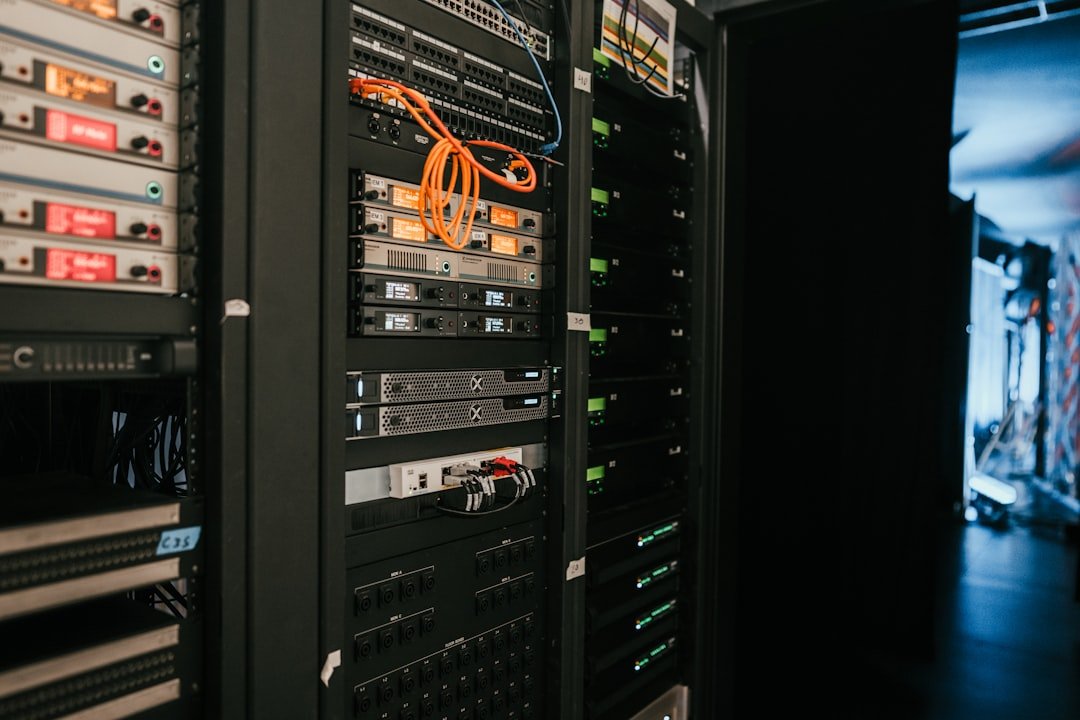
Photo by Kevin Ache on Unsplash.